UNDERGRADUATE WORK
Series of projects from freshmen level design class
DESIGN PRINCIPLES
FALL 2025
Project 1: 5 Stories without narrative
Humans understand the environment, things in that environment, and the relationship to those things in the same way that we understand ourselves and our relationship to other people. One of the main things we do is create quick understandings of our experience by creating hierarchy—what we need to pay attention to first. However, we also build relationships through relative proximity, relative similarity as well as produce attention through difference, contrast, and distance from the viewer. These are the design principles used in “Stories without narrative.”
Students were asked to “make a scene.”
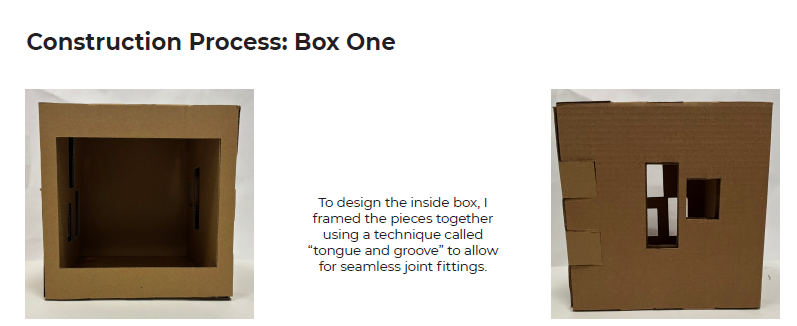
To do this, students had to first construct a 12” x 12” x 12” three-dimensional cube from corrugated cardboard. The cube had the following restrictions:
The cube must be hollow with a maximum inside dimension of 8” x 10” x 11” (in any orientation).
One side of the cube will be open to allow access and be considered as ‘front’.
Interior walls may be sloped but with no more of a difference of 2” between front and back of the interior volume.
Five rectangular openings must be cut in the cube. The cuts could vary in width but not be narrower than 2” or wider than 6” at any point.
Next the student collected five objects between 1” and 3” in height and width/diameter. None of the objects should have well defined representational content (cars, action figures, etc).
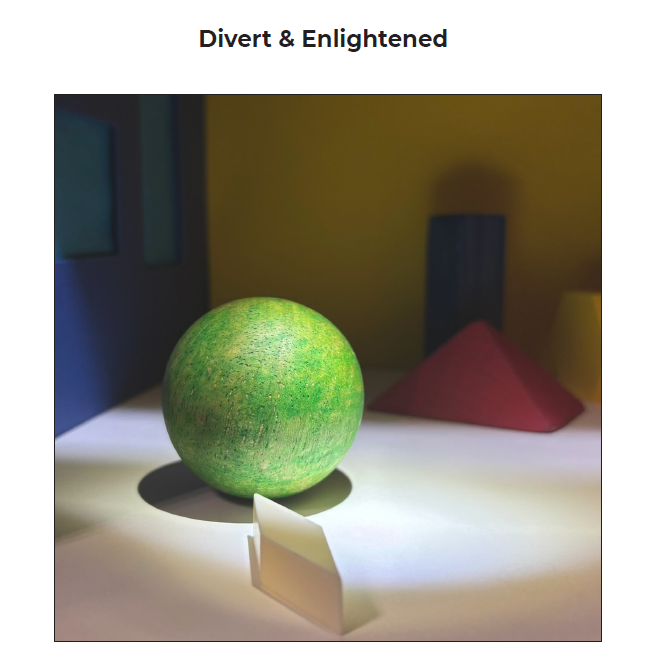
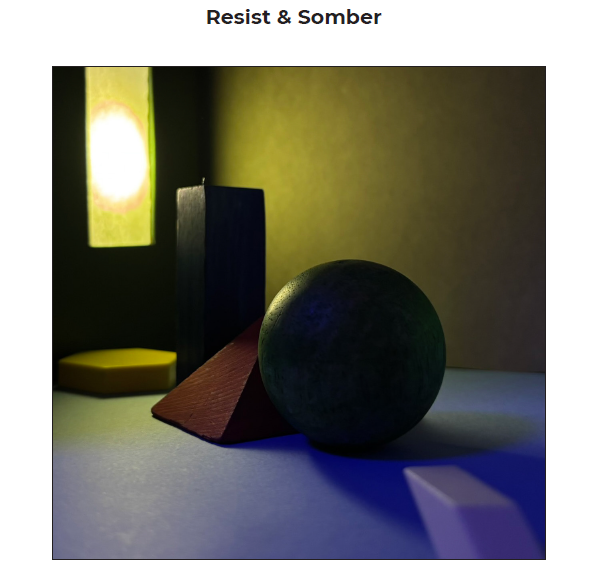
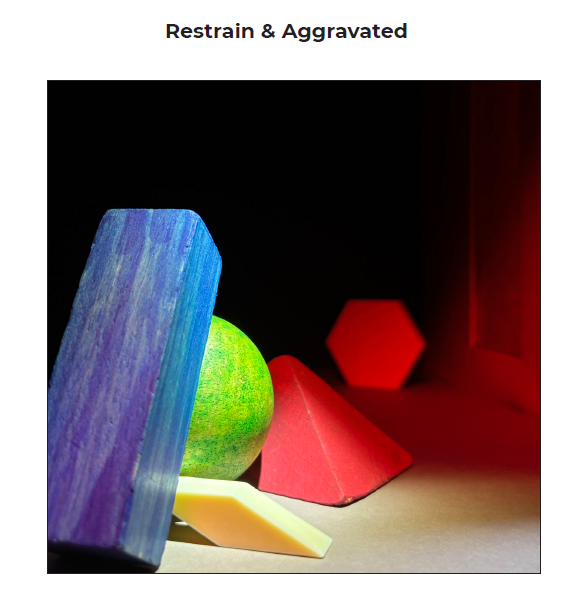
The students were given a list of words and concepts in which to create five groups (BEND-AGGRAVATED, IMPACT-ENLIGHTENED, etc.) Given these words and concepts in relation to the selected objects, the students worked with the the boxes to develop five scenes based on your selected A-B terms. Then, by exploring color themes and light quality (warm, cool, soft, hard) for each of the scenes the students were then asked to arrange the objects in the space based on their relative positioning, proximity to each other, perceived direction of focus, placement towards the camera and so on to make inferred narratives.

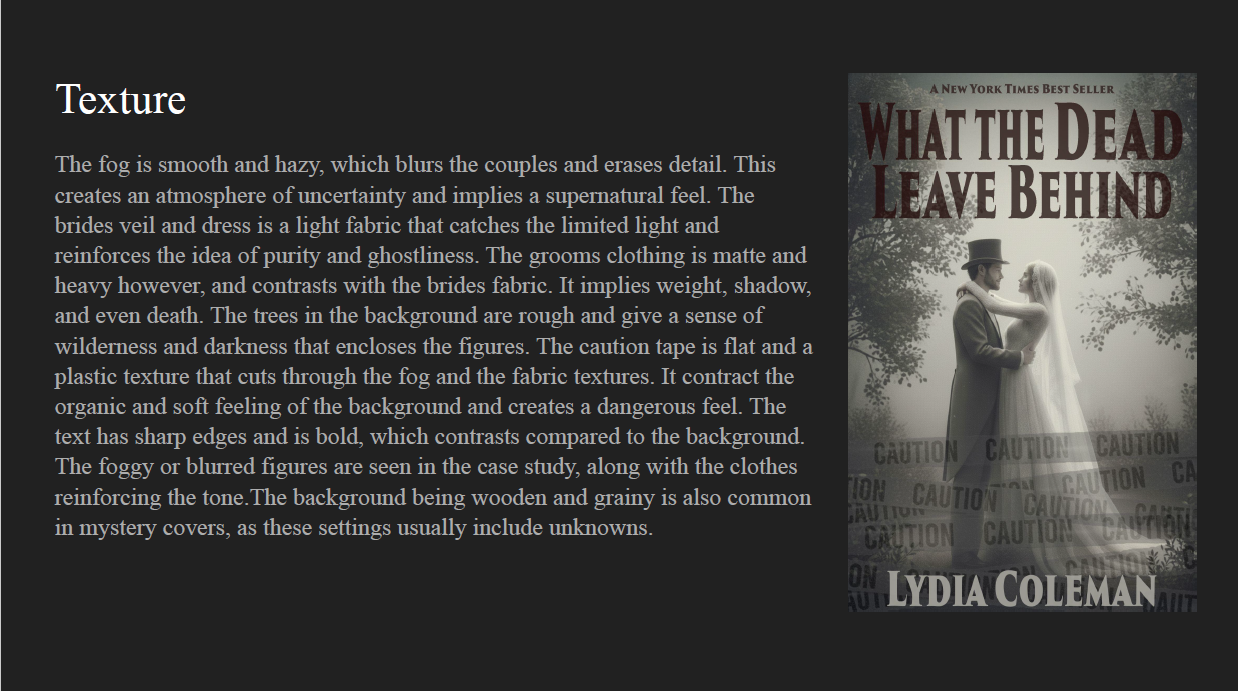
Project 2: Do Judge a Book by its Cover
Good design can be said to have two critical factors when it comes to interpretation (in addition to relevance).
First, “good” design elements are highly efficient – that is, elements within the design scenario operate in multiple ways to achieve the design objective of Cohesiveness.
Second, important aspects of the design are identified through reinforcement (redundancy), which is a form of repetition (conceptual). These multiple elements working together towards a single objective is Coherence.
Good design: The effective relationship between elements operating in efficiency and redundancy towards a single objective.
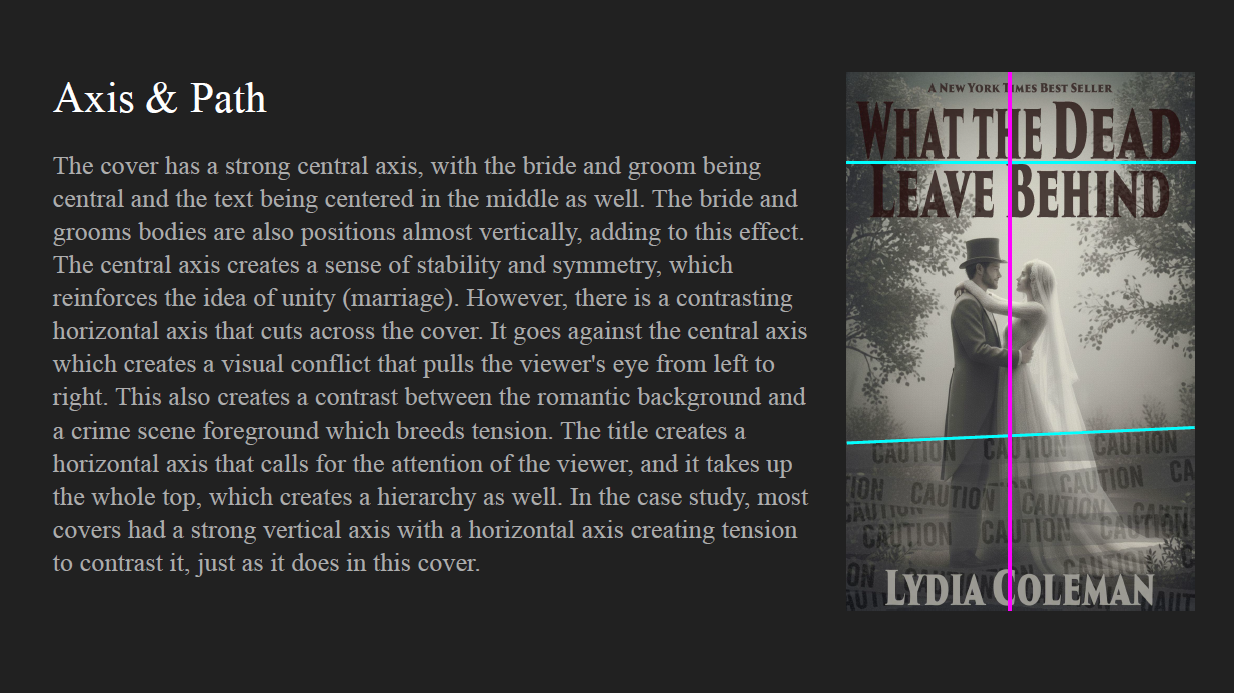
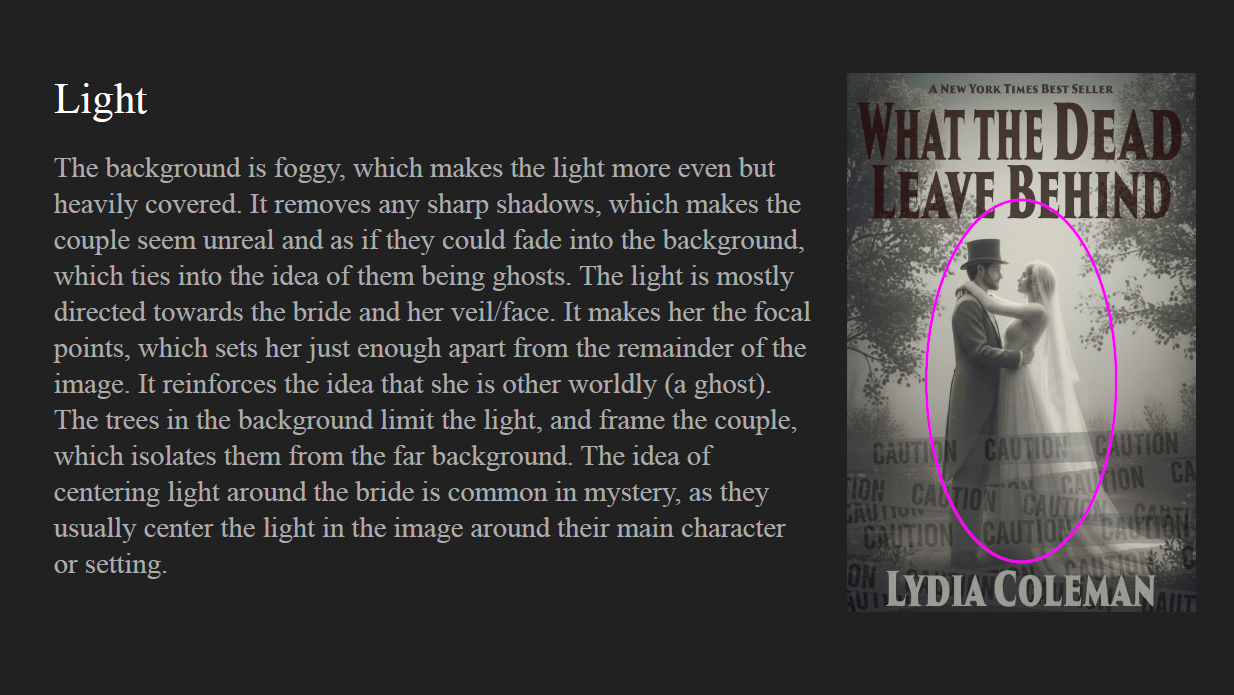
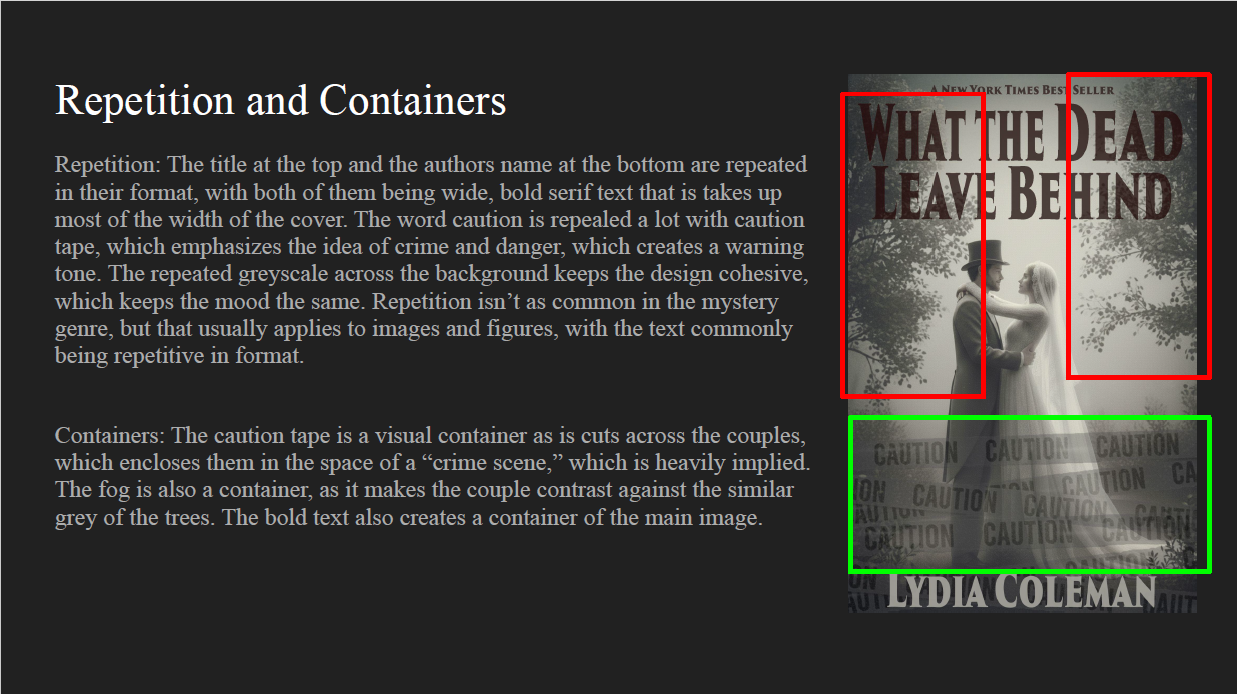
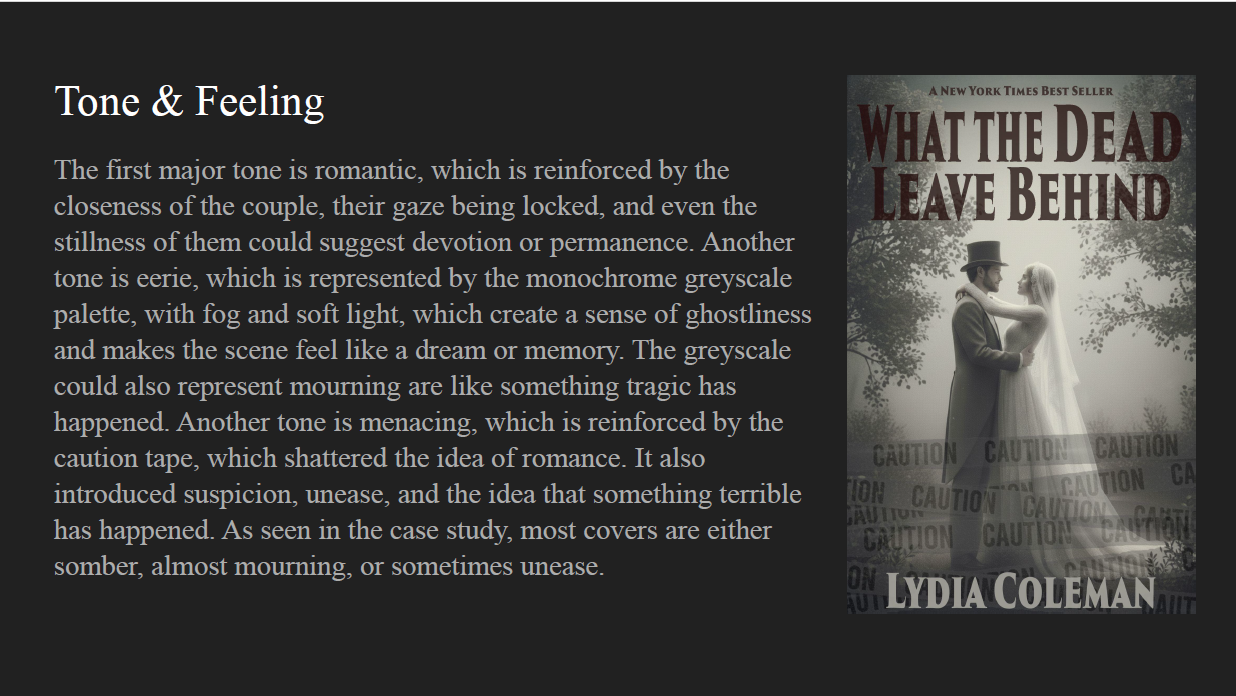
Students were asked to design a book cover using the above understanding of good design. The student decided the book cover content as well as what content was important (i.e. relevance), and in what order that importance will be arranged (i.e. priority hierarchy). However, these aspects of the content and its relationship was used to make design decisions through coherence and to establish a conceptual alignment, which used relational (operational rather than merely visual) efficiencies and redundancies.
Students were were given three random words by which to guide the design of a book cover. Through ideation (divergence and then convergence) around the three words students explored the nuances of what these words mean as a group and looked for shared relationships or a context that satisfied all of them. From that, the title of the book was developed and a short blurb about the book. The title and the blurb then guided the graphic communication of the book cover design which included front cover, spine, and back cover.
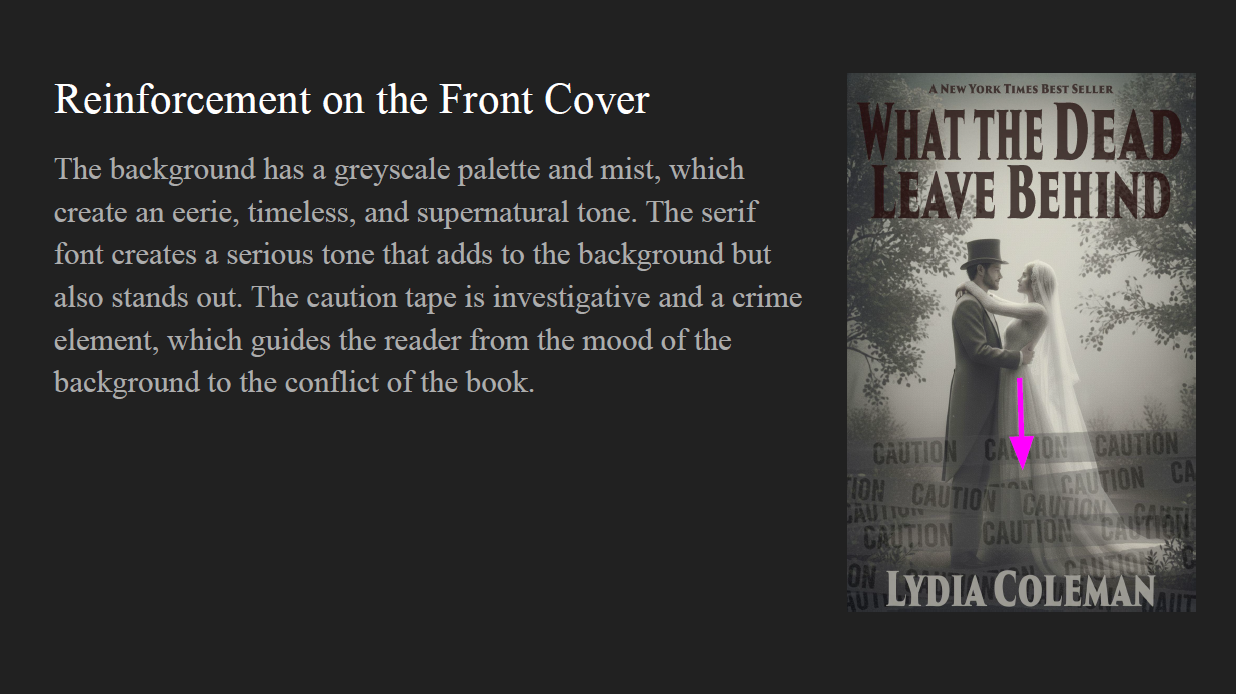
Each element (text, image, color theme, etc) was required to have at least three efficiency alignments and overall, the book cover had at least three elements that reinforced each other. Giving the book cover strong coherence of its elements.
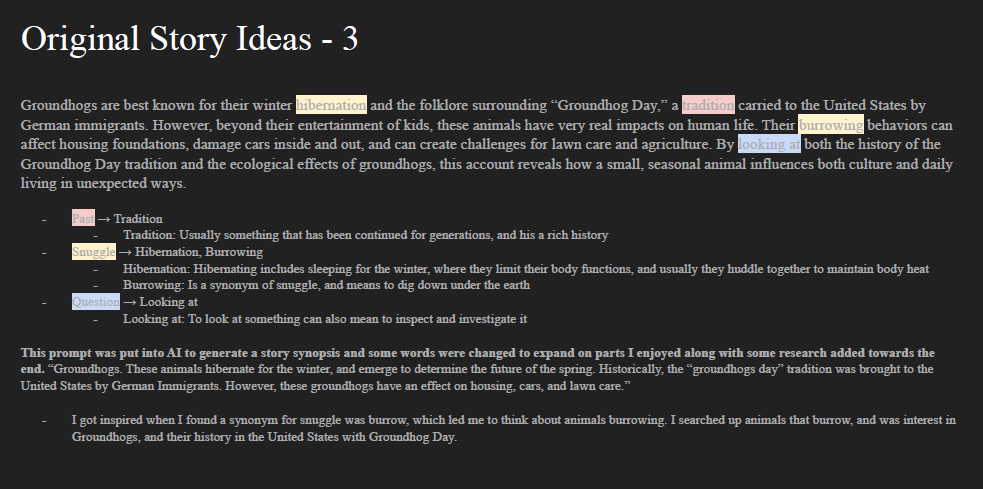
WORD IDEATION
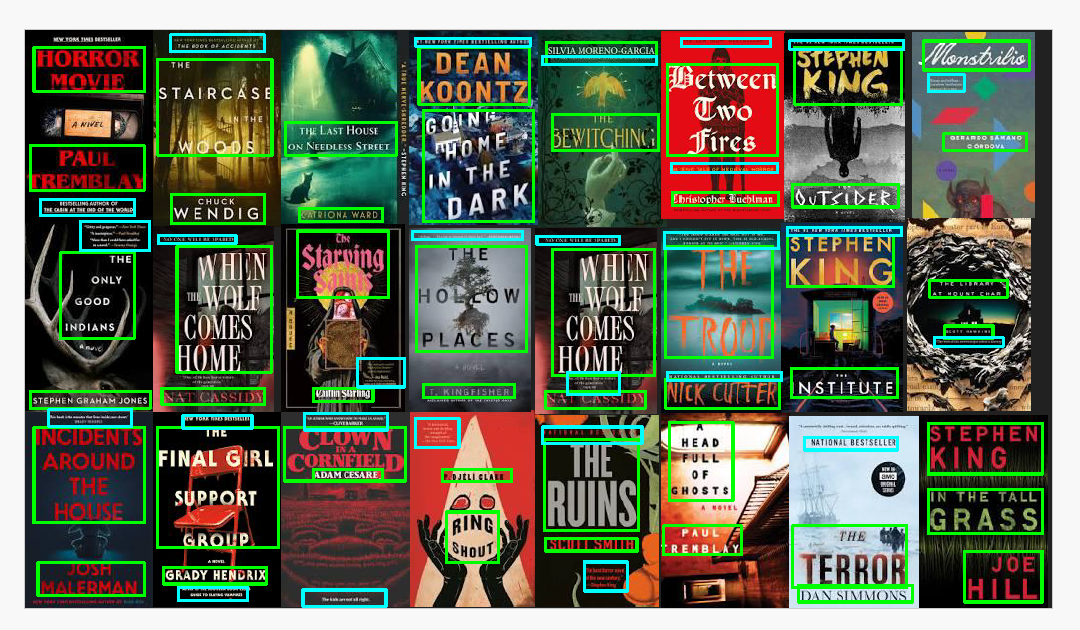
PRECEDENT ANALYSIS
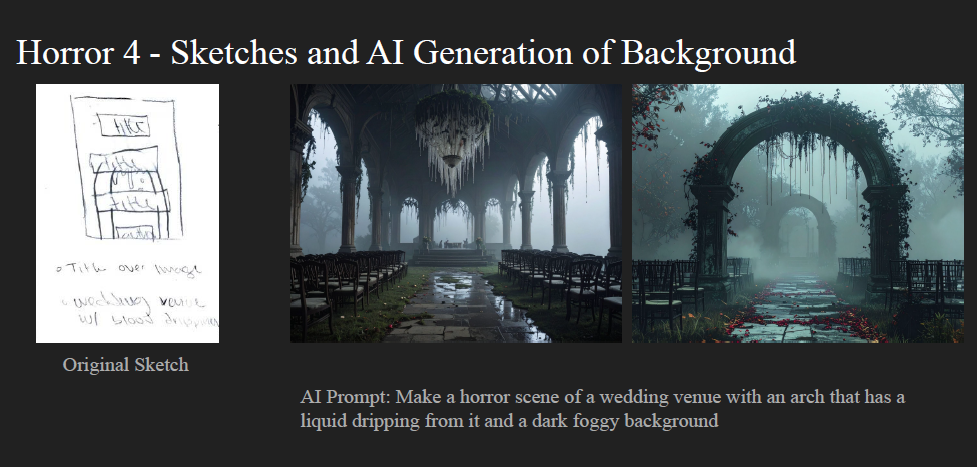

CONCEPT SKETCHES & AI GENERATION
REFINEMENT THROUGH EDITING TOOLS





Project 3: New Dog, Old Trick
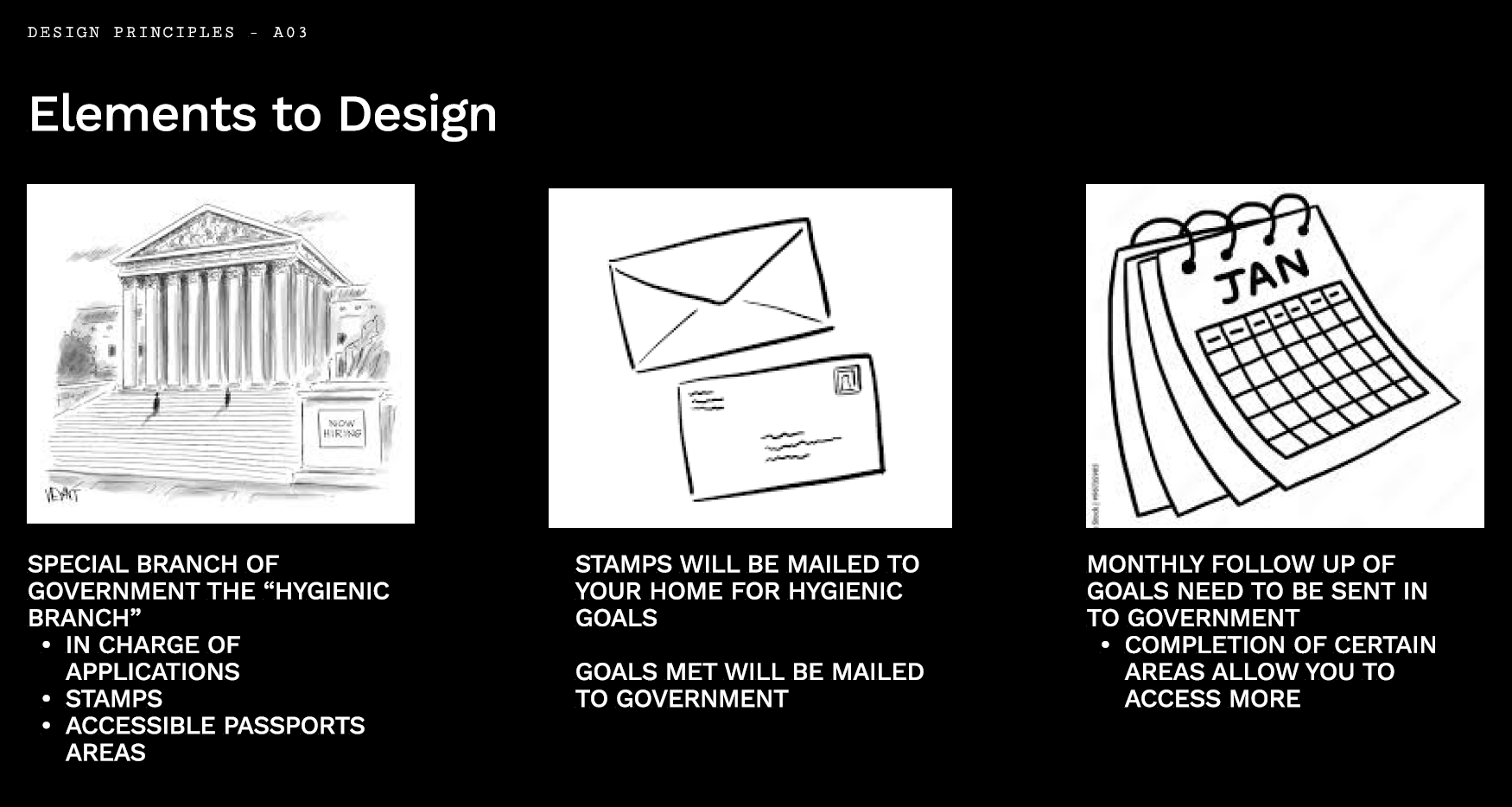
One of the most critical skills of a designer is the ability to abstract a current context, object, or requirement to its fundamental aspects. This enables the designer to understand the relationship between what was asked, what might be needed, and how to approach the project in a more successful way. This is called first principles thinking applied to design by re-framing. It may be understood as an exercise in abstraction (the reduction to essential qualities).
Project three asks students to get past seeing objects as objects (functional fixedness). Instead, the design process requires us to analyze the object to understand what it does (how it works rather than what it is). Considering design in this way means that designers do not necessarily need to redesign an object but to design a response to the situation the object was addressing.
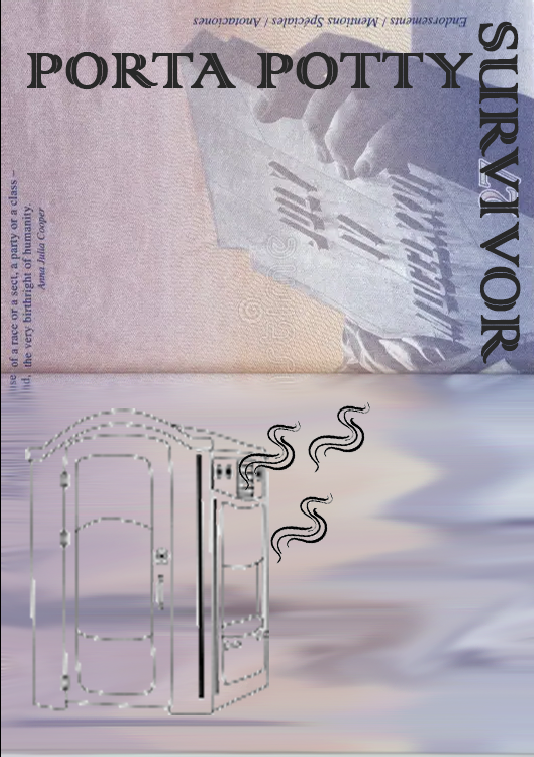
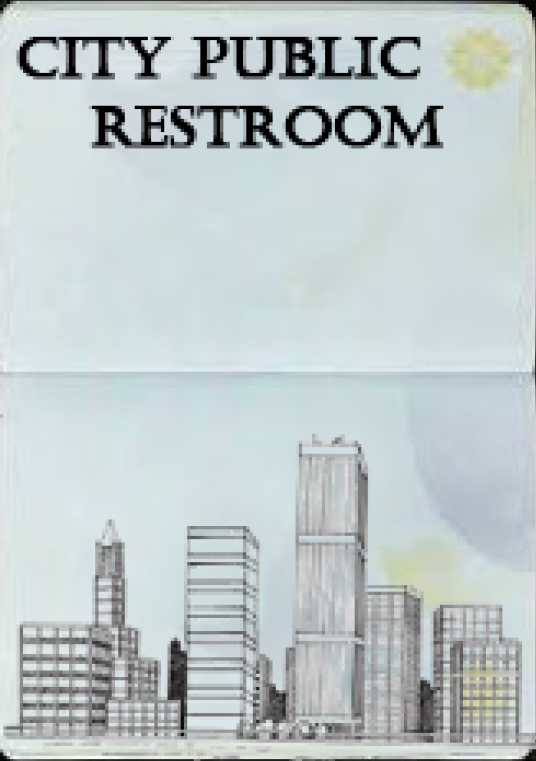
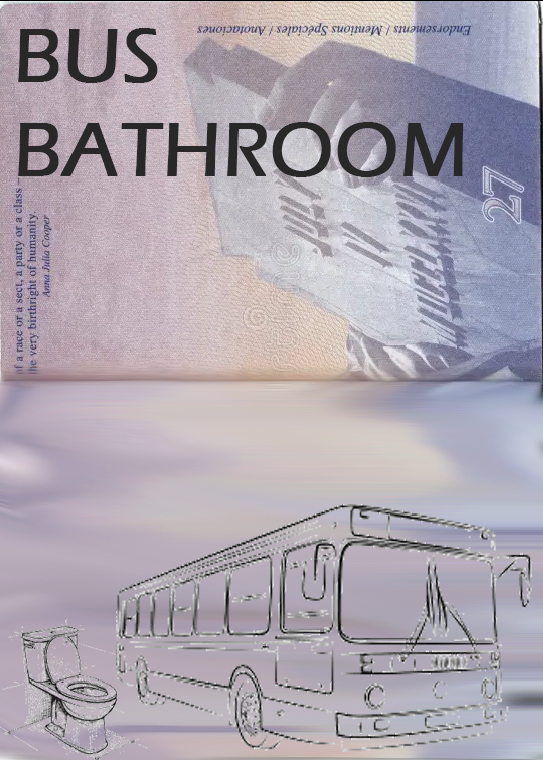
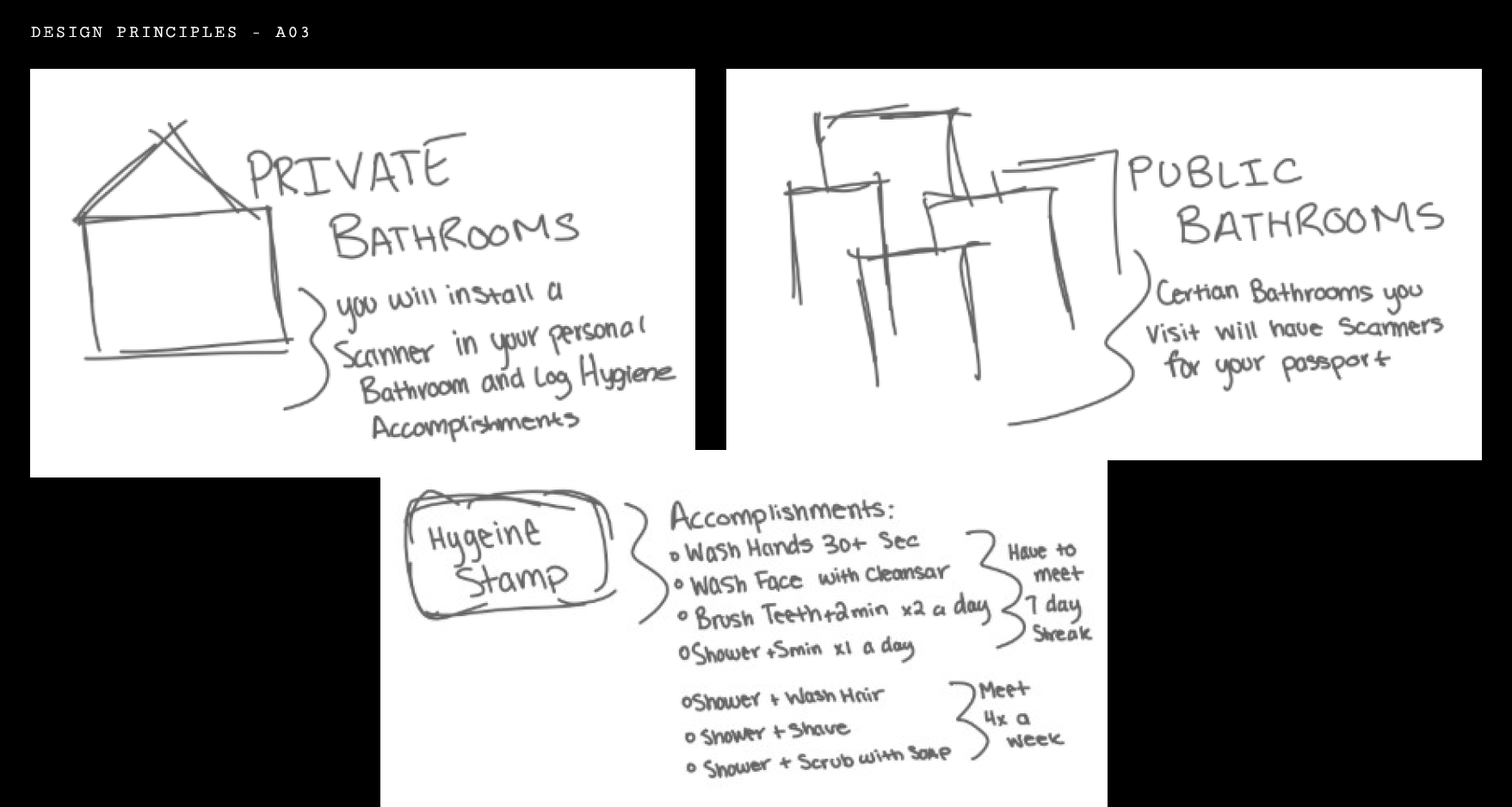
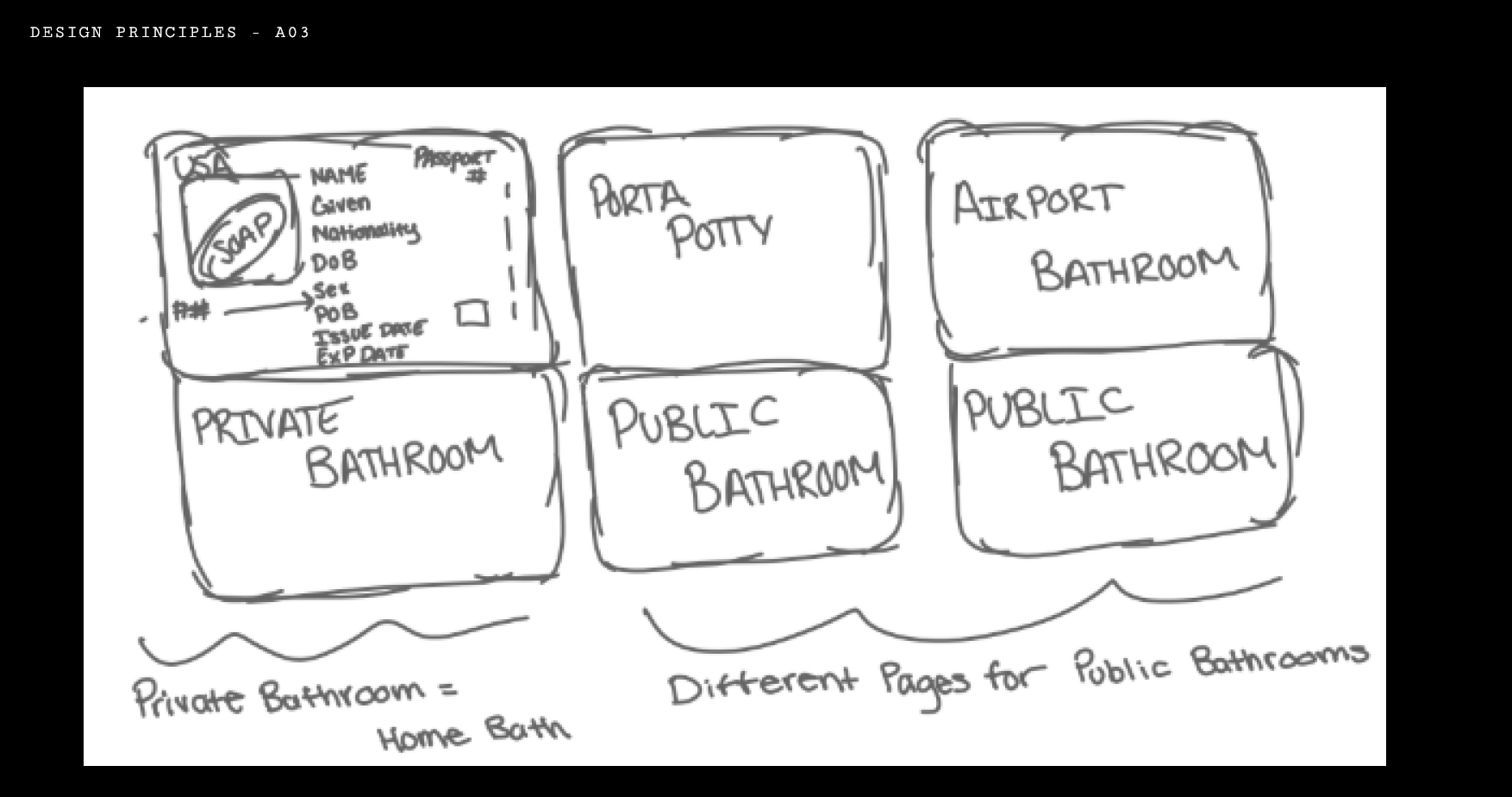
Students used abstraction processes (granular, categorial) to determine the original purpose of the starting object in order to reframe the object and then design a new object that meets the same intentions but in a different context. Something new was then proposed that addresses the same effect of the original. The question is how far can this design proposal go?




A Bathroom for Traveling





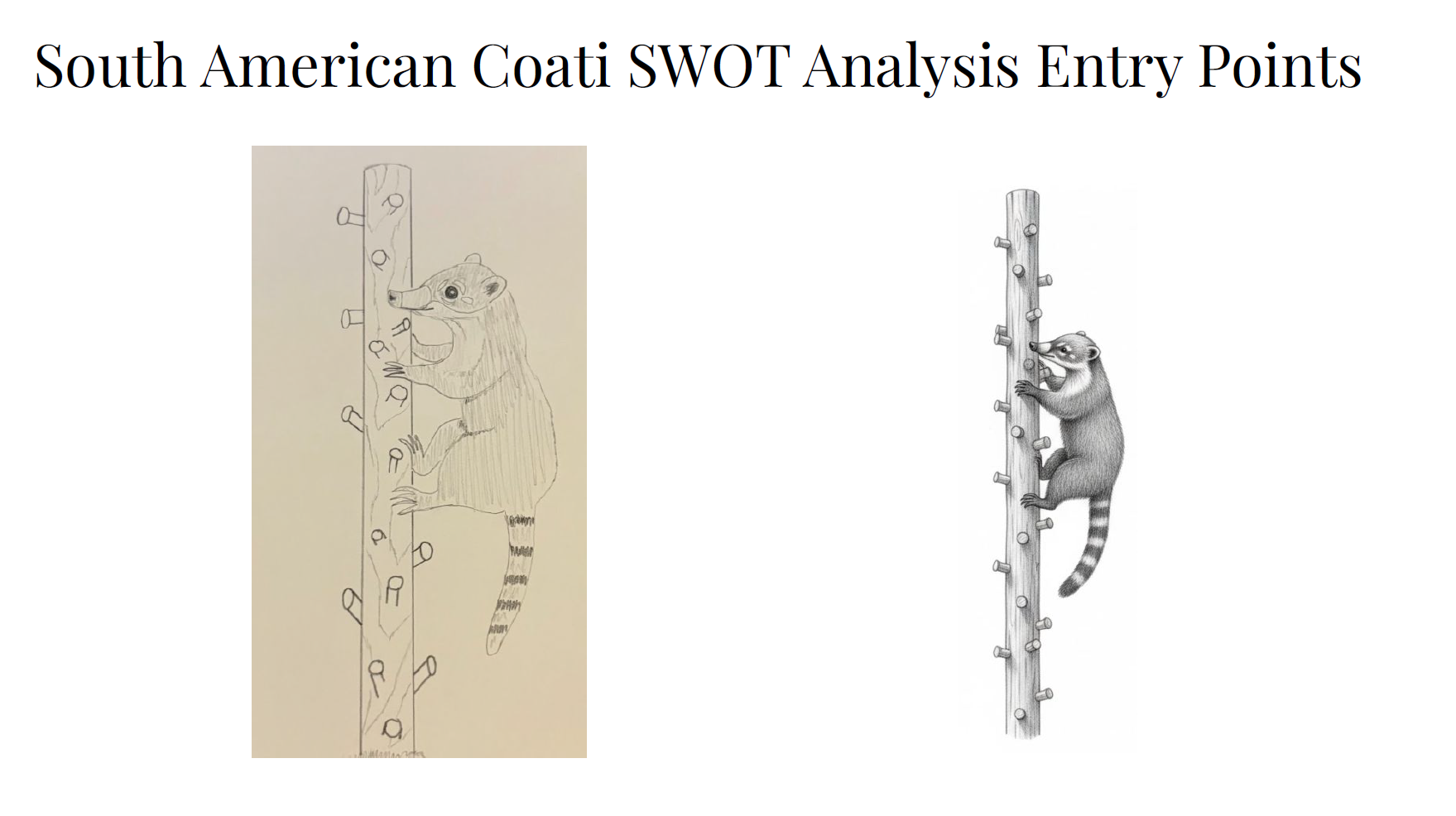
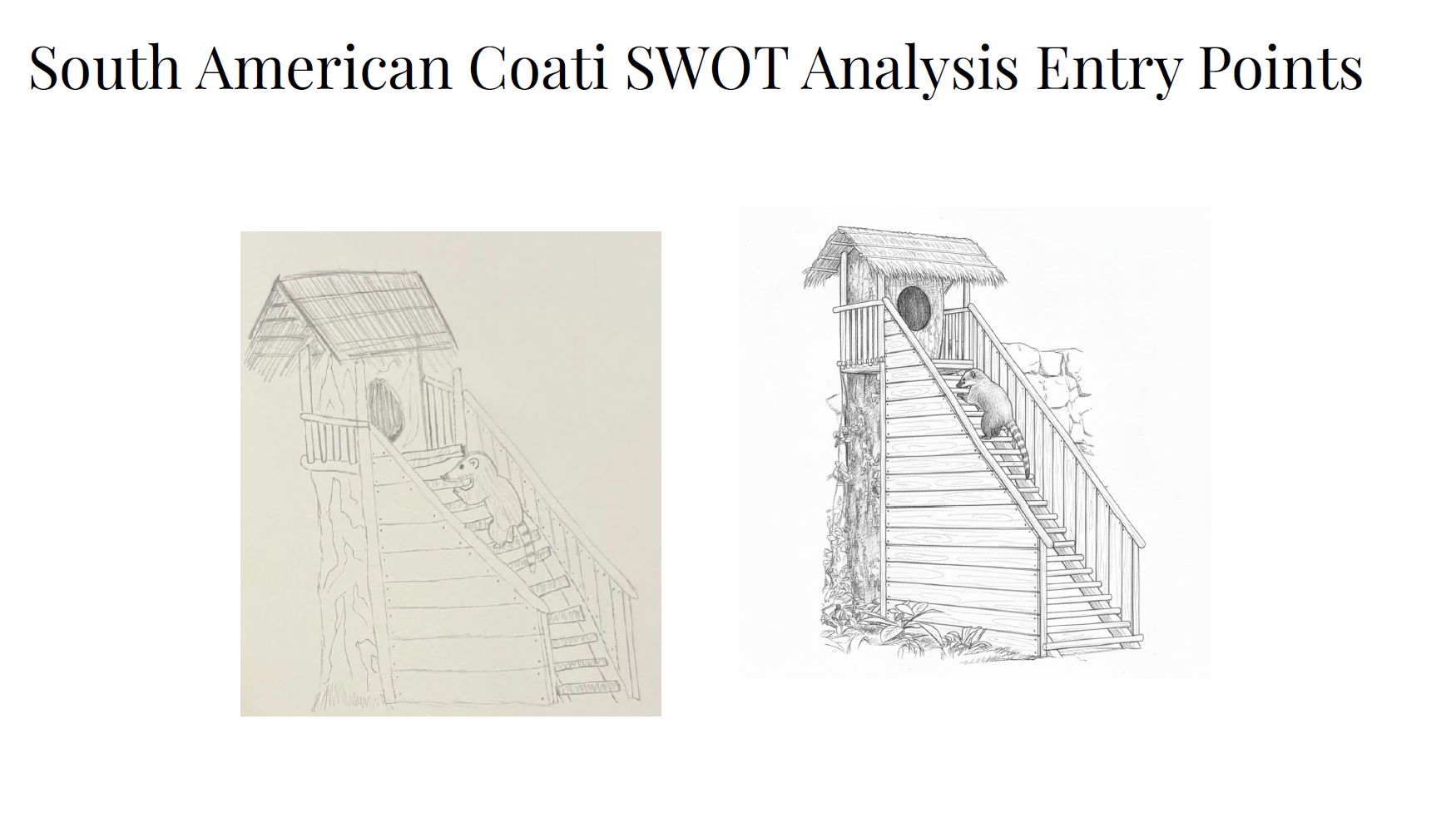
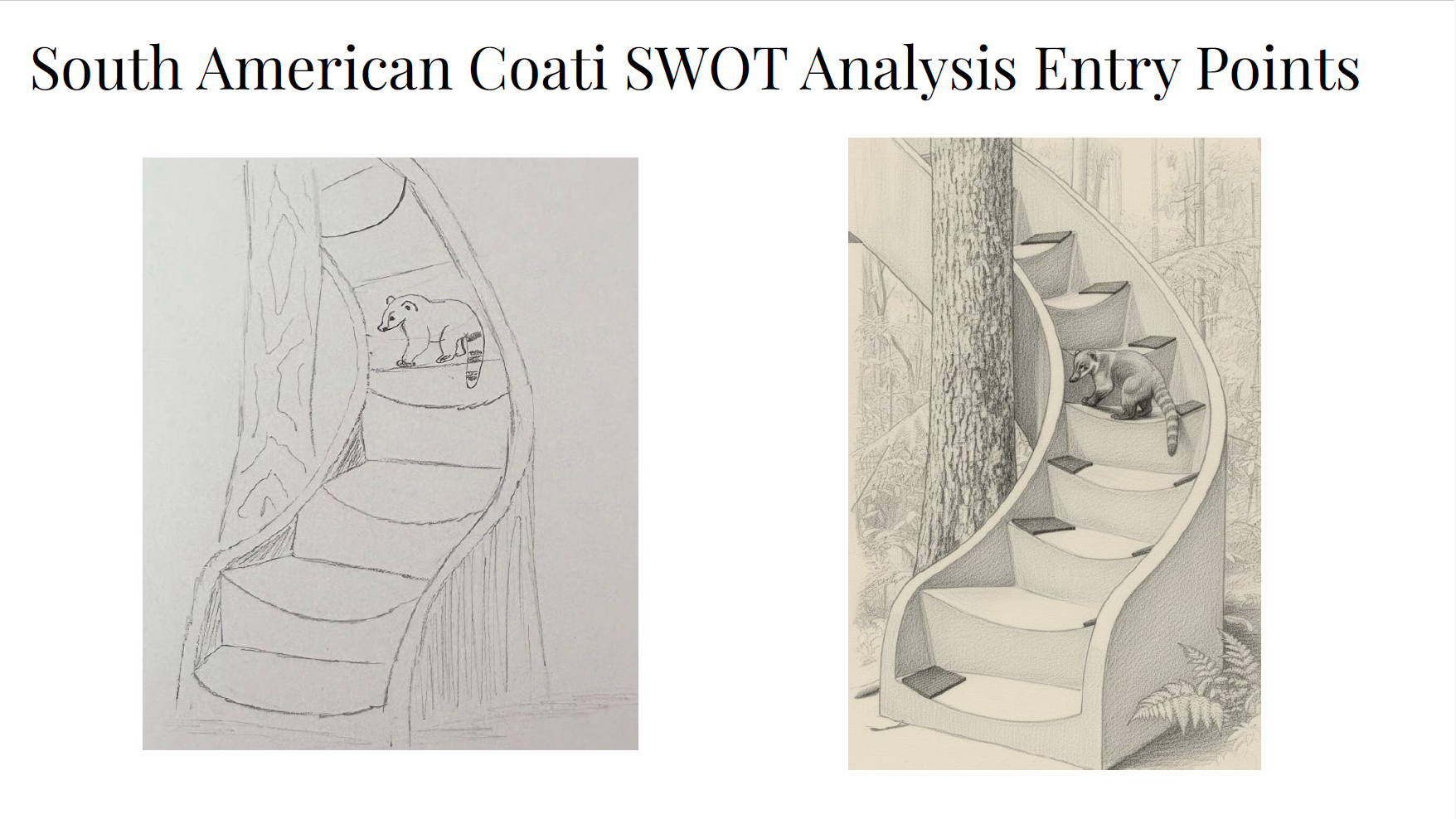
Project 4: An Animal and A Stair
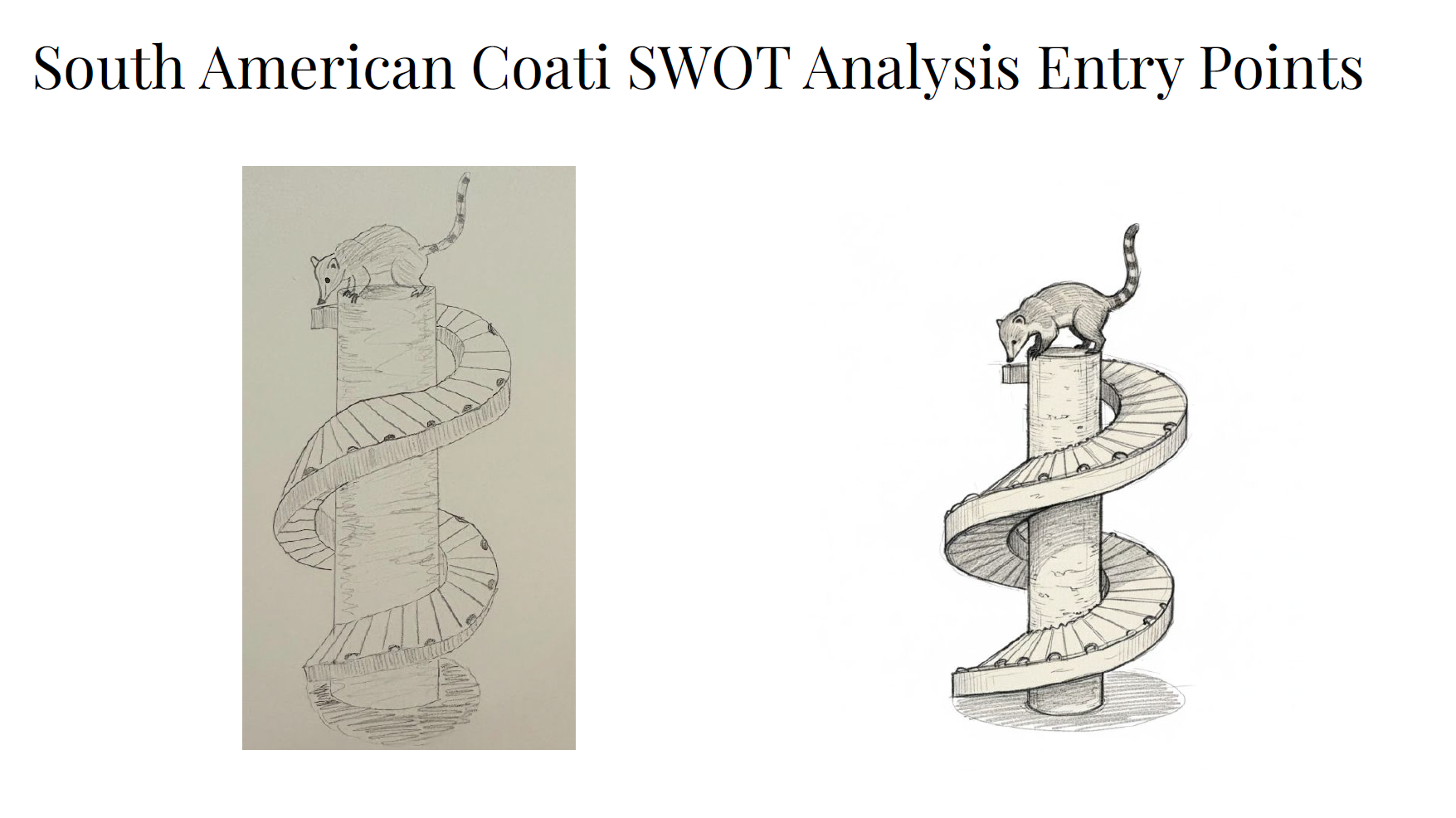
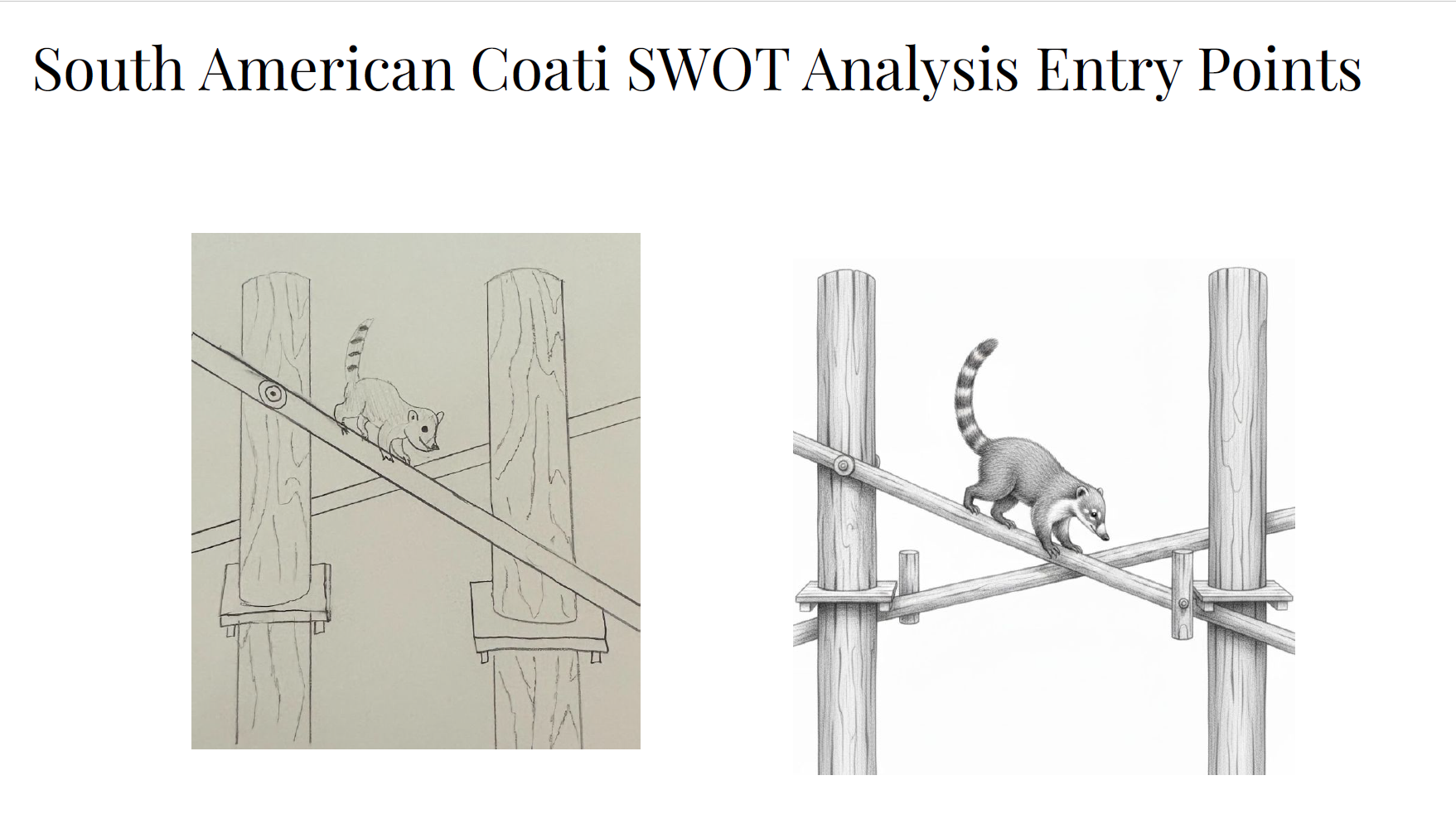
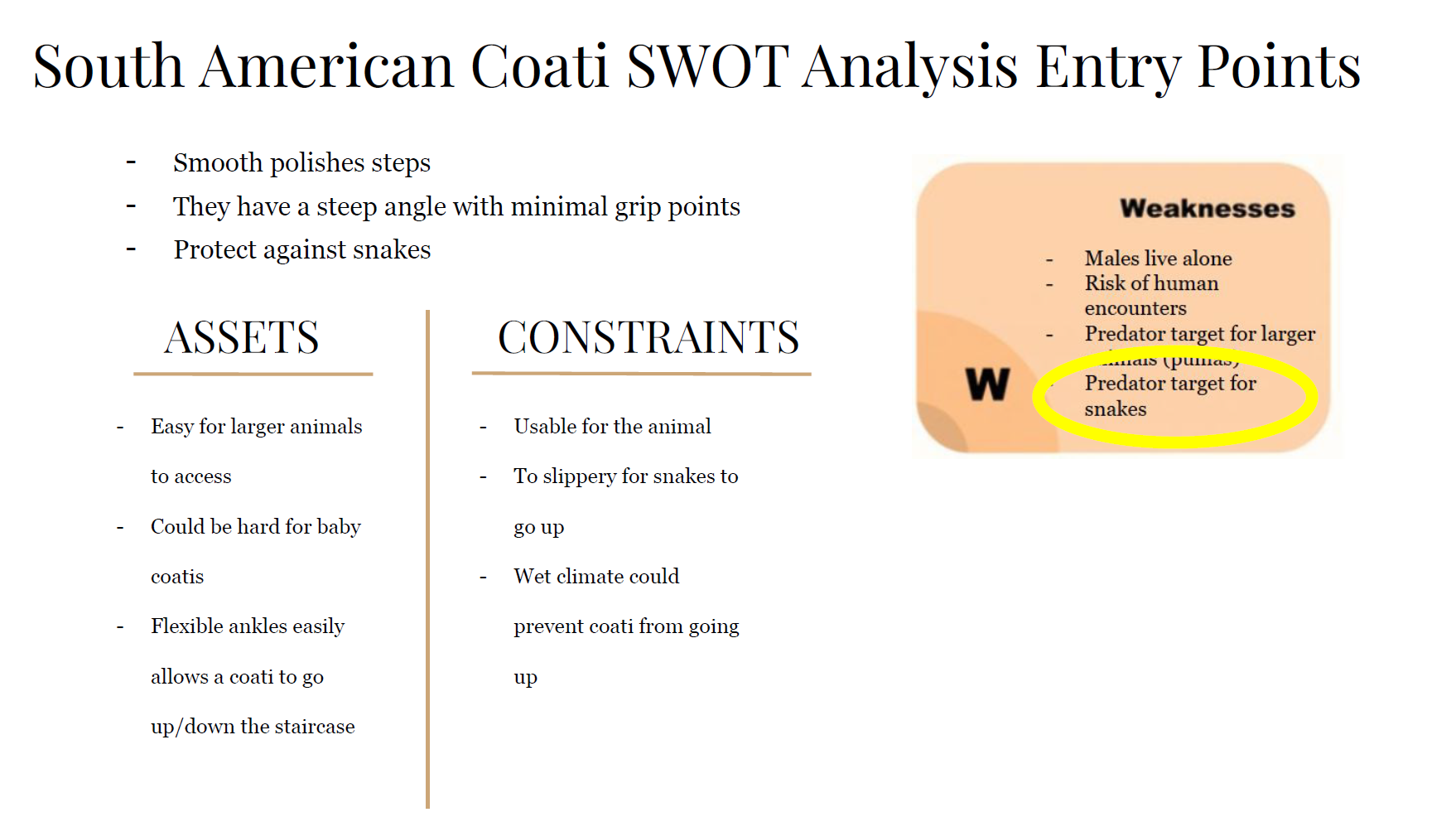
This project sets up new situations and asks the student to consider what might be possible if we consider the different environmental situations where animals might need stairs. The process is then one of exploration (divergence) followed by analysis (convergence) and the selection and production of an option (design outcome).
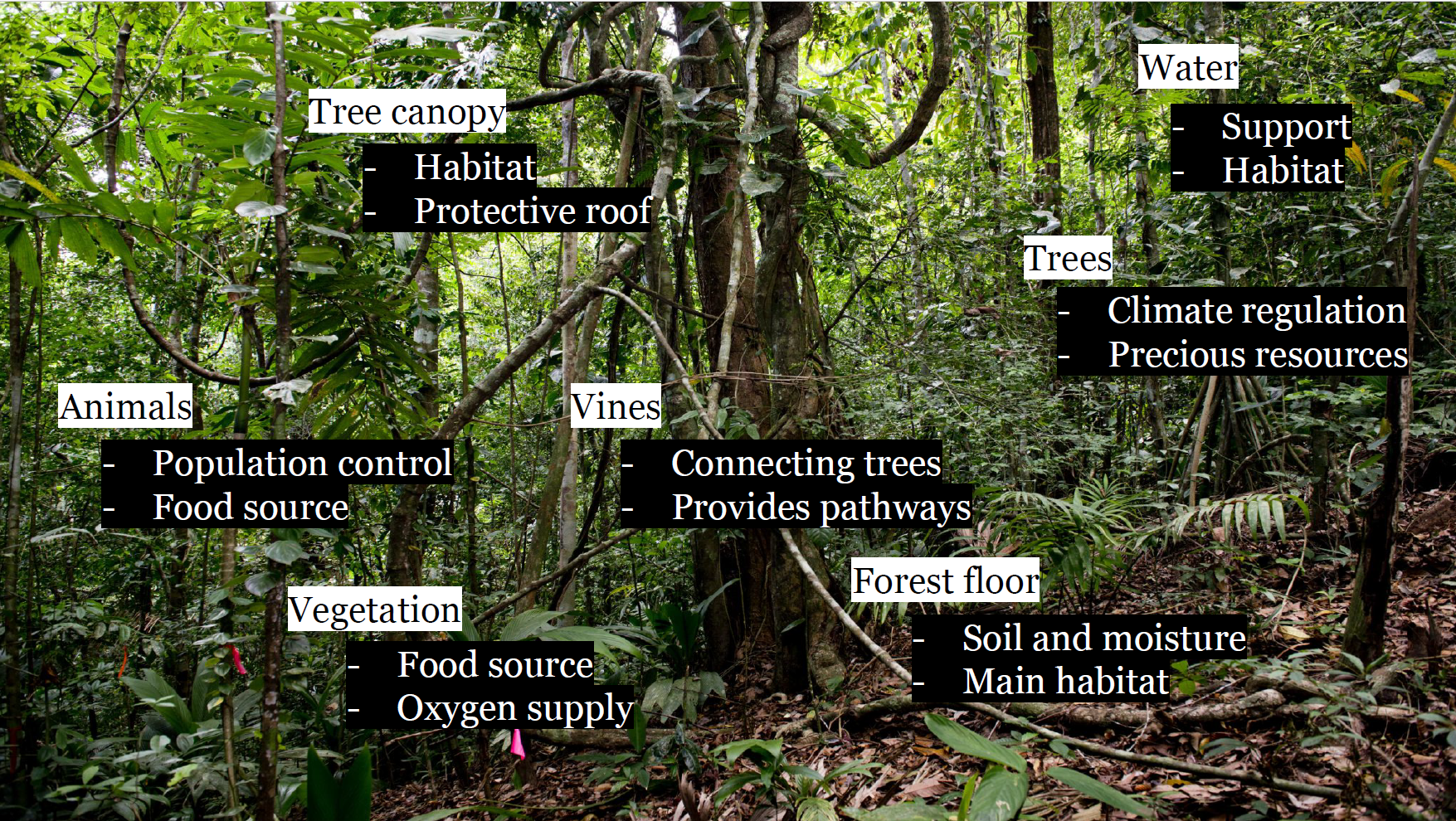
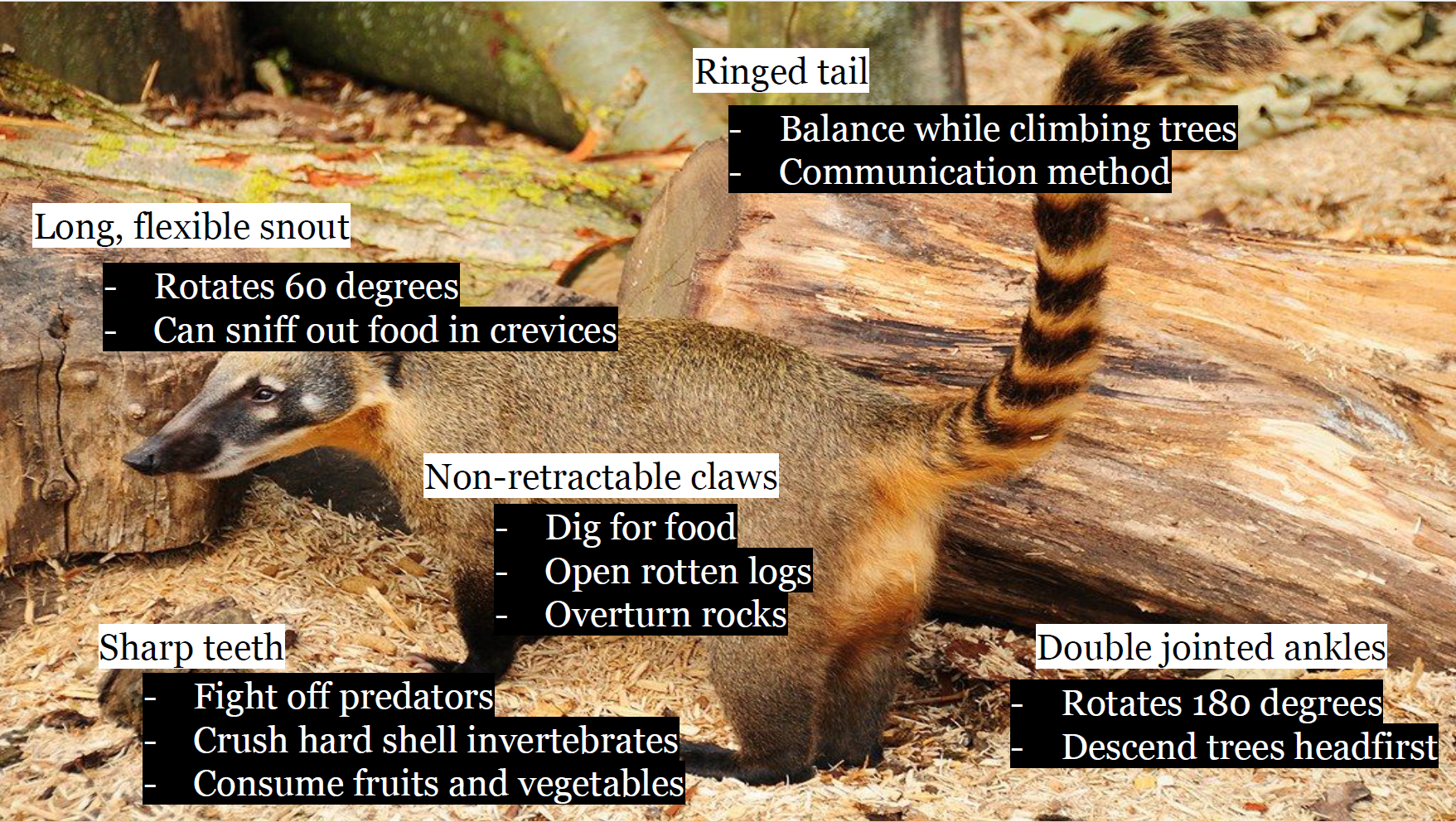
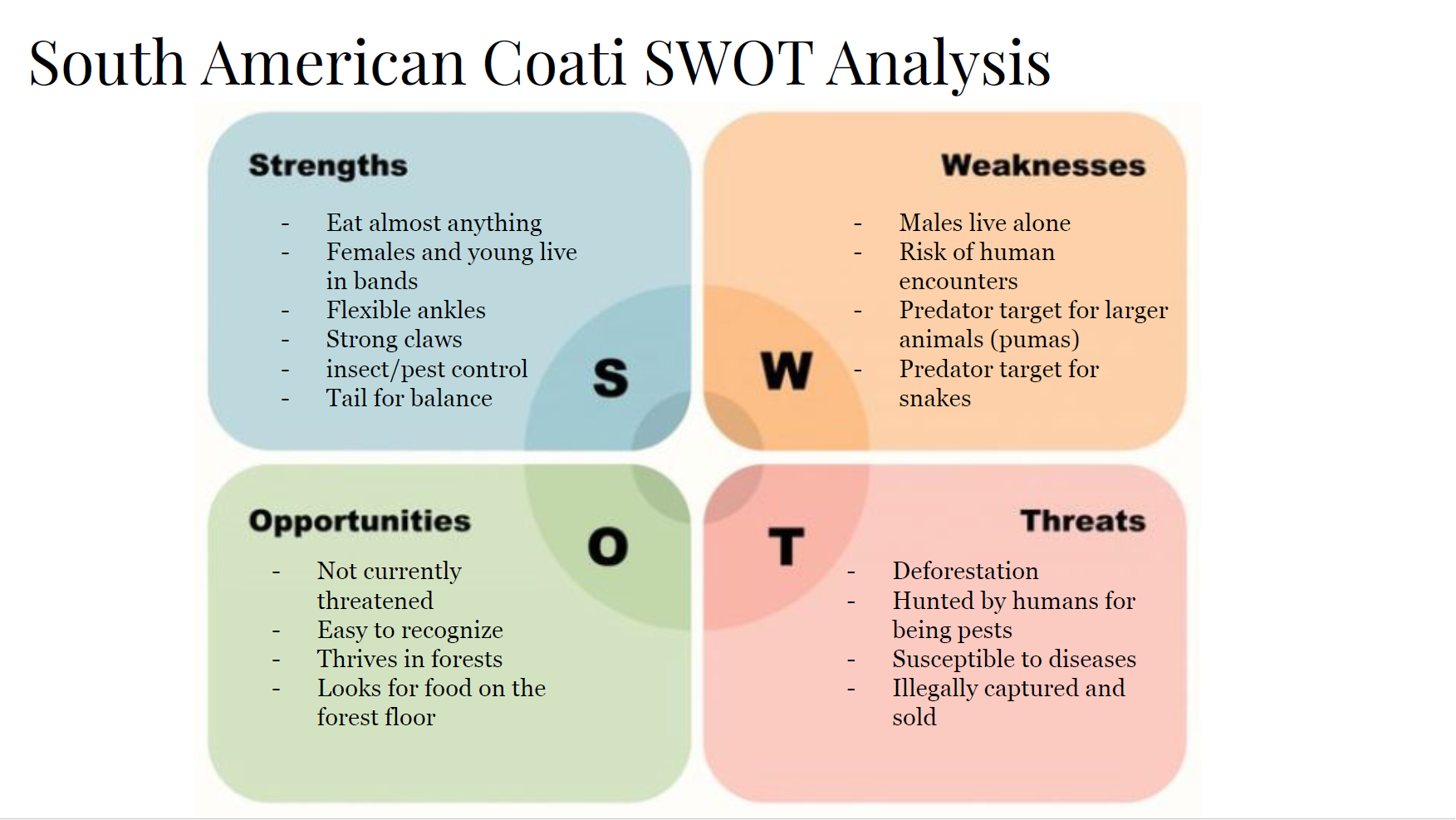
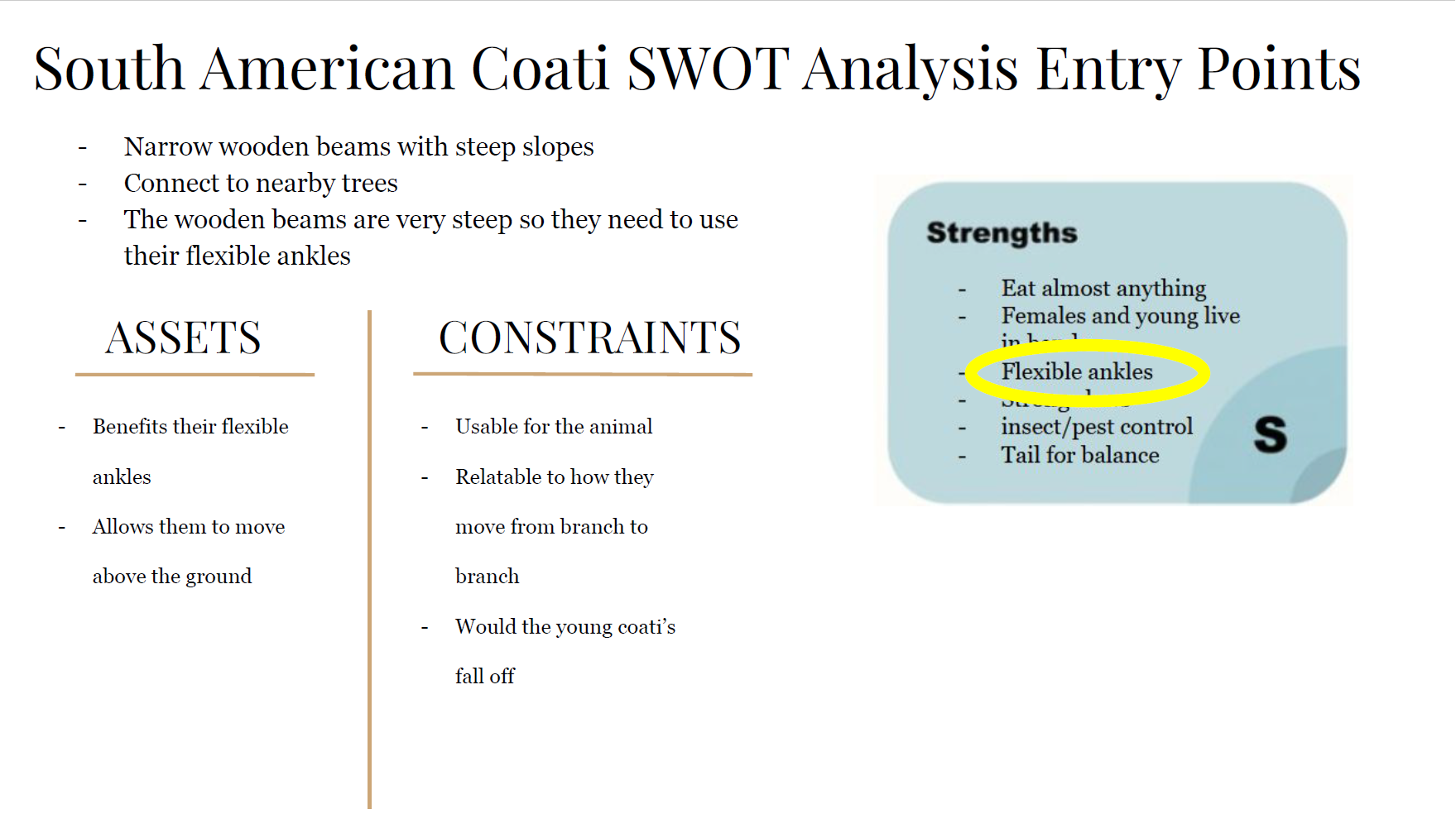
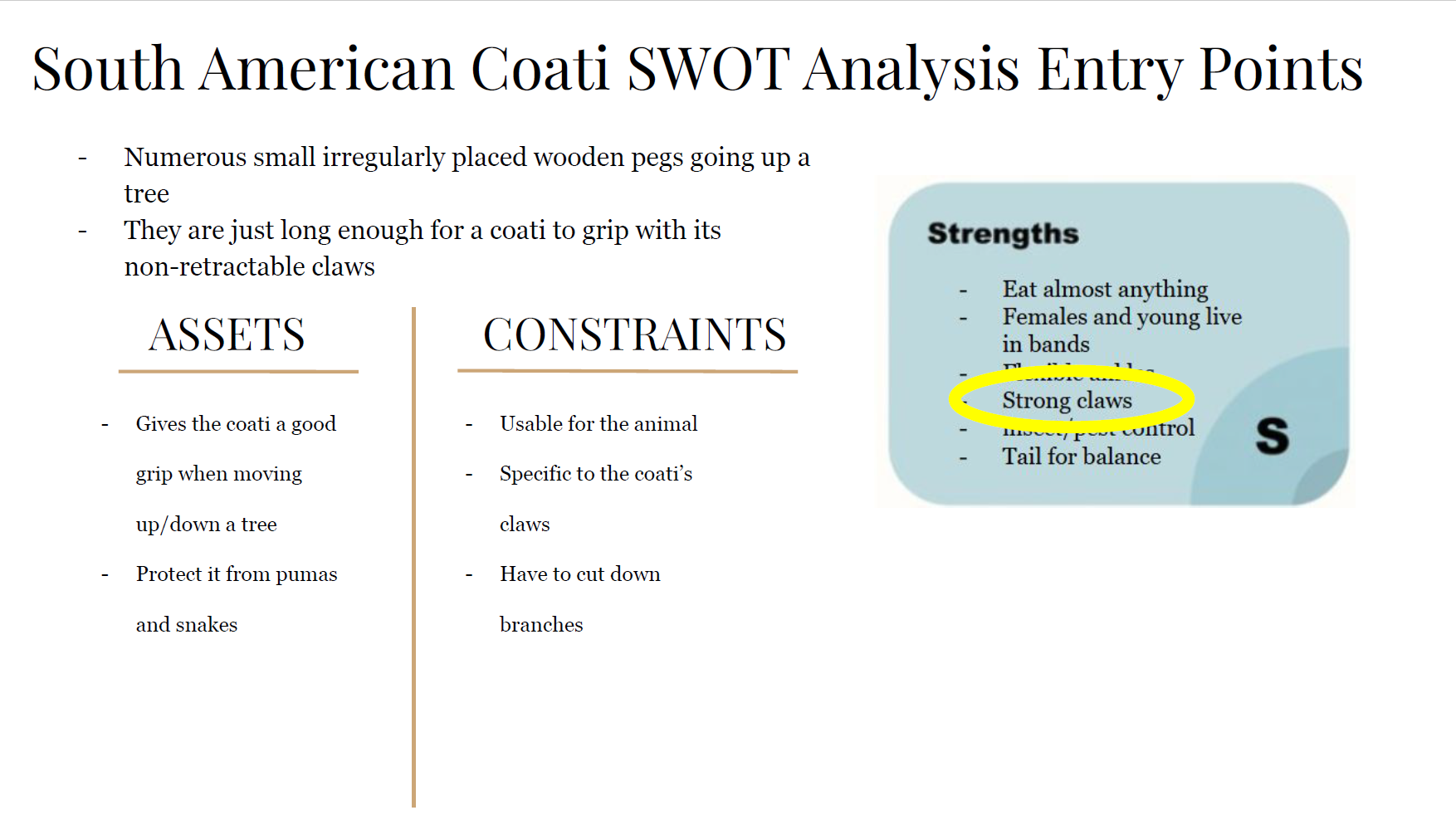
The new content for this assignment focuses on assets, constraints, and generating different projects based on the starting information from the research. The project introduces how we use what we know about something (animal - lit review/synthesis) and what we learn from existing contexts (stair - case study/analysis). The animal research gathers existing knowledge including physiology, mechanics, behavioral, and social interaction. The stair research is an abstraction project that breaks the start from its whole to its parts and what each of those parts do (their actions).
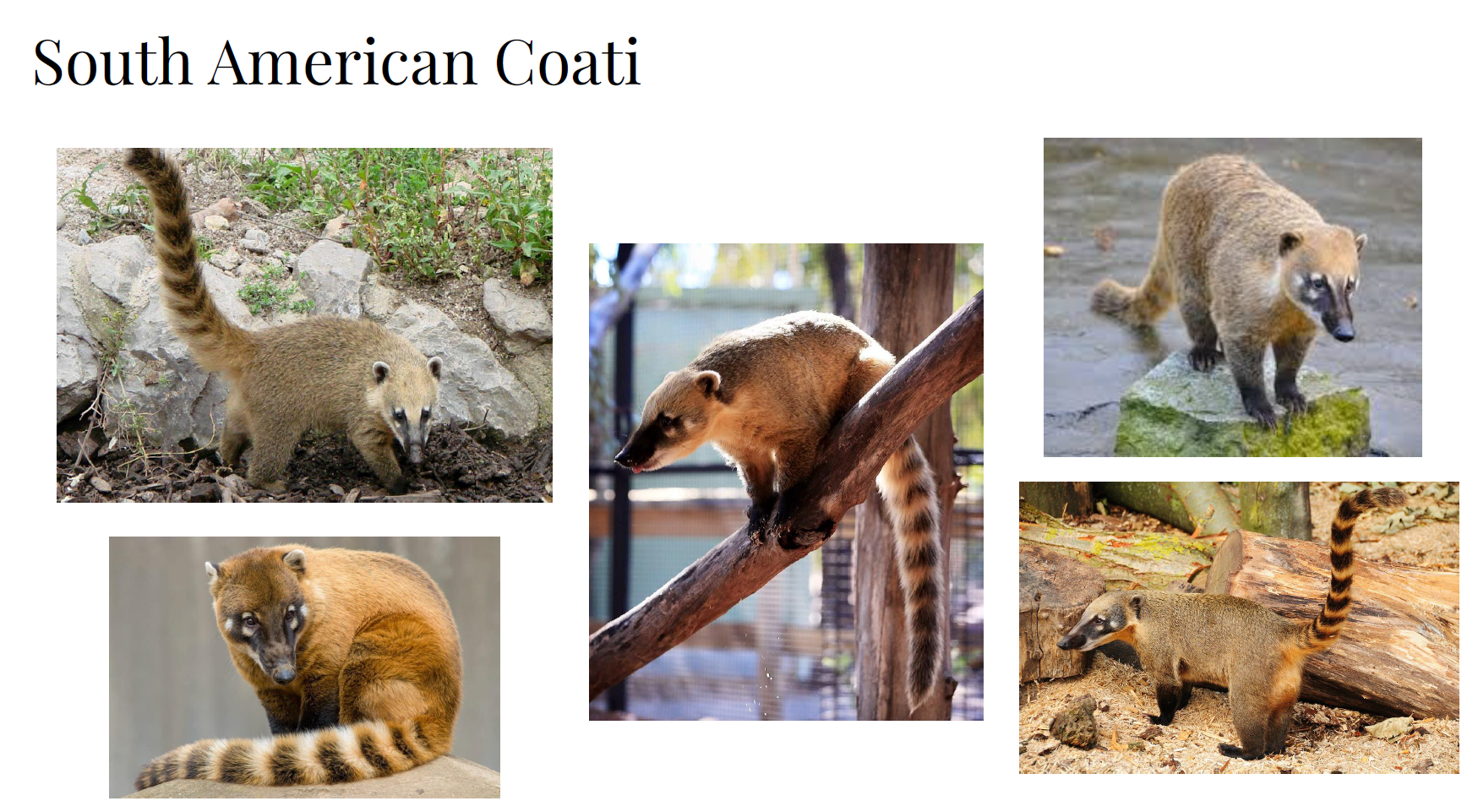
A Stair for a South American Coati